It’s that time of the year again! No…. not the festive season, the time for Suzy Ratcliff’s ever-excellent lesson plan based on this year’s Word of the Year contest by Collins Dictionaries.
The lesson plan is recommended for C1/C2 students and involves students examining the shortlist for word of the year and putting them into practice in a series of engaging tasks.
Download the student handout and teacher’s notes below:
This is a quick activity I made to revise some emergent language from a C1 Advanced listening task we did in class. I took the interesting expressions from the transcript and got Chat GPT to incorporate them into a new text.
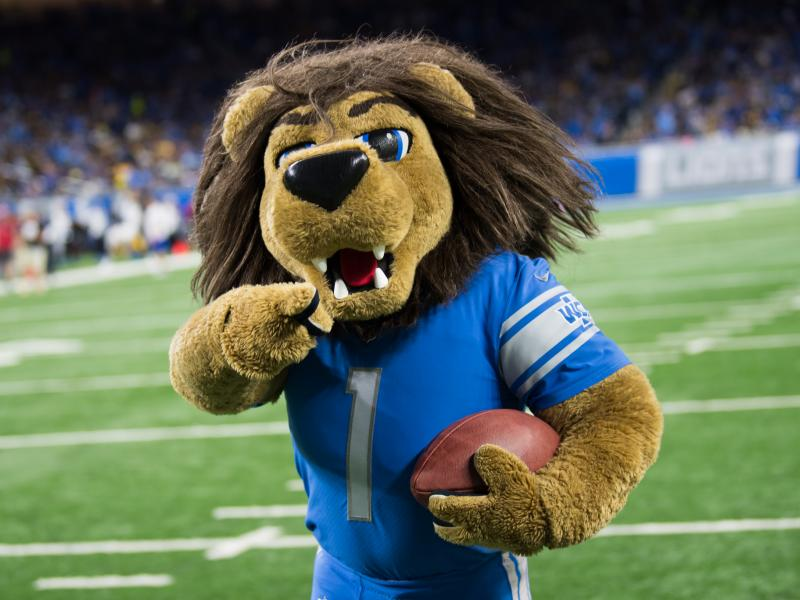
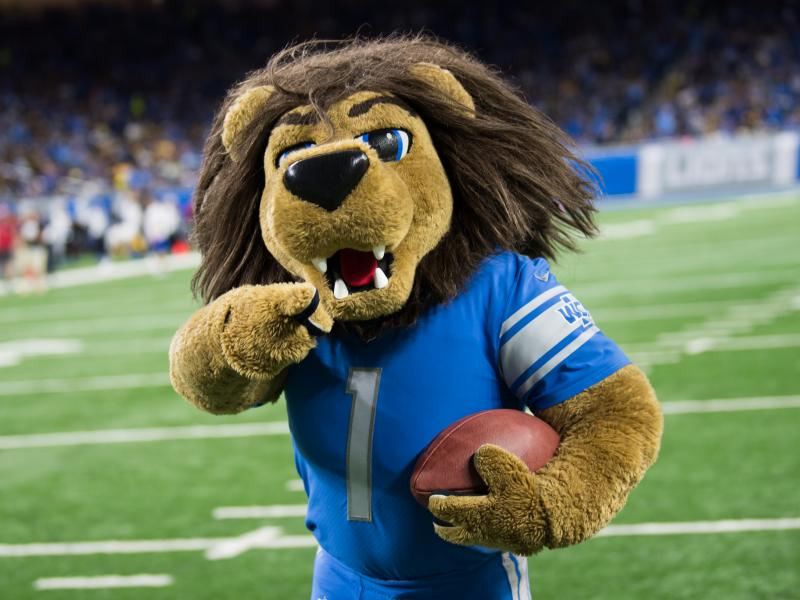
Students read a text about professional sports mascots and then examine some expressions from the text. There is a complete version or a more challenging gapped version. I’ve also included an AI generated recording of the text from play.ht.
What do you think the life of a sports mascot is like?
What are the pros and cons?
What skills, abilities or characteristics do you need to do the job?
Reading
Read the text and see if it mentions any of your ideas from part 1.
“Hi everyone! I’m Jake, and I’ve recently started an exciting new job that I never imagined I’d be doing – I’m the mascot for our city’s professional soccer team! It’s a world full of energy, enthusiasm, and a few surprises along the way.
One major perk of this job is the thrill of entertaining thousands of fans. I seriously get a kick out of seeing their smiles and hearing their cheers. It’s not every day you get to be the heart and soul of a game!
Now, you might think being in such a huge crowd would be nerve-wracking. And you’re right! Initially, I used to get stage fright. The thought of performing in front of so many people would play on my mind for days before a match. But, believe it or not, once I’m in my mascot costume, all that anxiety just melts away.
Let’s talk about the financial side. While I’m not making megabucks, the salary is decent enough, and the joy I experience is worth more than any paycheck.
However, being a mascot isn’t always easy. There are times when the heat inside the costume can really put me off, especially on sunny days. It’s a challenge to stay focused and not get distracted by the discomfort.
Staying in shape is crucial in this line of work. You need a lot of stamina to perform energetically throughout the game. It’s not just about the costume; it’s about being fit enough to bring life to the character. For this reason, I keep trim by exercising at the gym at least 3 times a week.
At times, I can get hung up on small mistakes during a performance. Maybe I didn’t land a dance move perfectly, or I tripped over my giant mascot feet. It’s easy to get flustered in those moments, but I’ve learned to laugh it off and keep going.
The team I work with is a tight-knit group. They’re incredibly supportive and we all get a buzz from creating memorable experiences for the fans. I was taken aback by how welcoming and friendly everyone was from my very first day.
In conclusion, being a sports team mascot is an extraordinary experience. It’s a job that requires energy, dedication, and a love for the game and its fans. If you’re someone who loves to entertain and stay active, this might just be the perfect role for you!”
Look at the expressions in bold and try to guess their meaning.
Conversation
Would you ever like to be a mascot?
How important is it for you to earn megabucks in your job?
What do you get a kick out of/a buzz from in your job/studies/personal life?
How well do you deal with stress and pressure? Do you get flustered easily?
Do you get stage fright when you have to speak in public?
What can people do to reduce stage fright?
Do you get hung up on mistakes that you make? Or are you good at forgetting/letting go of past mistakes?
If you’ve got an important event or deadline on the horizon, does it play on your mind? Or are you good at keeping things in perspective?
How important do you think perks are when choosing a job?
Would you choose to work for an unscrupulous company if they offered you a lot of perks?
company car
private health insurance
stock options
employee discounts
etc.
What do you do to stay in shape or keep trim?
How important is it for you to keep fit?
Have you ever tripped over in a really embarrassing way? What happened?
It’s that time of year again! No, not Thanksgiving or Christmas, time for Collins Dictionary to choose its word of the year for 2023! And time for Suzy Ratcliff to write another great guest post on the topic! Download the student handout and teacher’s notes below:
While you’re here, check out Suzy’s company English Boost and follow her on Linkedin for more teaching materials.
Did you worry quite so much about a robot takeover before the advent of ChatGPT?
The revolutionary AI-powered language model burst into the public consciousness in late 2022, wowing us with its ability to mimic natural human speech. It could do much more than that, actually – need copy for a presentation tomorrow morning? No problem. A recipe for dinner using only what you’ve got left in the cupboard? Done. And while people were understandably fascinated, they also started to get a bit anxious. If computers were suddenly experts in that most human of domains, language, what next? Cue an explosion of debate, scrutiny, and prediction, and more than enough justification for Collins’ 2023 Word of the Year: AI.
Collins defines artificial intelligence, for which AI is the now-familiar abbreviation, as “the modelling of human mental functions by computer programs”. This rather captures the profound nature of challenge facing us. Can machines really become human-like? And how will that pan out for our species?
Until we find out the answer to that question, though, life carries on. And, as the Collins shortlisted words show, it carries on in often peculiar and fascinating ways. Take digital culture. We’re all familiar with the influencer: a person who leverages their popularity on social media to spark new trends and earn money from endorsements. The word has its own family of variants: mega-influencer, micro-influencer, even nano-influencer. To which we can now add de-influencing – when one of these oracles uses their power “to warn followers to avoid certain commercial products, lifestyle choices, etc”, as the dictionary definition puts it.
One recent attempt at de-influencing concerns another of the shortlist’s highlights, the deliciously waspishnepo baby, a label applied to someone “whose career is believed to have been advanced by having famous parents”. The would-be de-influencer in this case was film star Gwyneth Paltrow, who last month judged the phrase an “ugly moniker”. Paltrow’s mum and dad? Actress Blythe Danner and producer Bruce Paltrow. We can only assume that seeing her parents make their way in the industry was something of a canon event for the young Paltrow – an experience “essential to the formation of an individual’s character or identity”.
As well as obsessing over the lifestyles of the rich and famous, we’ve been increasingly focused on our own health and wellbeing. Scientists and public health experts have warned of the dangers of ultra-processed foods, which are “prepared using complex industrial methods” and frequently made up of “ingredients with little or no nutritional value”. These empty calories can lead to multiple problems, including diabetes and obesity. One potential treatment for both of those conditions is the apparent “wonderdrug” semaglutide, also known by its tradename, Ozempic. Semaglutide seems to be effective at suppressing people’s appetites, allowing them to lose weight – but it simply hasn’t been around long enough for us to know quite what the long-term effects might be. Incidentally, the prefix “ultra” – Latin for “beyond” – forms part of another shortlisted word. ULEZ, the acronym for ultra-low emission zone, will be familiar to Londoners, who have to pay a charge if they drive a polluting vehicle into the city.
ULEZ became particularly contentious in 2023 as a result of the Uxbridge and South Ruislip by-election, in which voters seemed to reject plans for its expansion. It isn’t the only political hot potato in the shortlist, though. The UK’s cost of living crisis has been driven by inflation – rising prices – with some convinced that businesses are making excessive hikes in order to boost their profits, so-called greedflation.
A different type of financial problem, debanking, also makes the list, after populist politician Nigel Farage claimed his bank, Coutts, tried to close his account because of his political views. The issue was thrust into the spotlight and many others subsequently came forward to complain of having been debanked without explanation.
After all that heavy stuff you might like to sit back and enjoy watching a sedate game of cricket. Except that Bazball – the newly energetic (some say aggressive) form of the game named for England Test coach Brendon “Baz” McCullum – is currently in vogue. Perhaps 2024 will prove more relaxing? We can only hope.
Written by David Shariatmadari, author of Don’t Believe A Word: From Myths to Misunderstandings – How Language Really Works
Ex 1. Complete the sentences with your own ideas, then compare and discuss with your partner.
….. really wowed me in 2023.
This year, …. was thrust into the spotlight.
…. was a canon event in my life because …
Ex 2. Discuss these questions:
Can machines really become human-like? How do you think that will pan out for our species?
What is it exactly that sparks our obsession over the lives of the rich and the famous?
What were the top political hot potatoes this year? Why were they so contentious?
Are there any ULEZs where you live? Do you think they are a good idea? Why (not)?
What potential problems could arise from semaglutide and other new drugs and medicine which burst into the market?
In what ways have you noticed greedflation where you live? How have the hikes in prices impacted you?
Have you ever had to deal with someone waspish? Have you ever felt waspish yourself?
Ex 3. Can we learn from AI?
Work in pairs. Type this prompt into ChatGPT (edit it to include the language you want to use):
Write a short dialogue using the phrases ‘a hot potato’, ‘to pan out’, and ‘to burst into’.
Read the dialogue out loud and look up any new vocab.
Now ask it to change the dialogue in some way and read it again.
(Make it more formal/informal/jokey/fun…)
Compare both texts. What changes did ChatGPT make? What do you notice is different and why?
It’s nobody’s favourite exam reading exercise! This is a slightly tweaked version of a very old lesson plan I use to help C1 students tackle the part 7 gapped reading task. Apologies for the rather ugly PowerPoint template! Download the PowerPoint and handout below: