
This time on the podcast Katy and Tim explore some hypothetical scenarios and what they would do in them.
Download the transcript and useful vocabulary here: shorturl.at/6Lowf
This time on the podcast Katy and Tim explore some hypothetical scenarios and what they would do in them.
Download the transcript and useful vocabulary here: shorturl.at/6Lowf
This time on the podcast Katy and Tim discuss the weird and wonderful world of online dating and learn some useful vocabulary to describe all too common experiences on dating apps and platforms.

This time on the podcast Katy & Tim debate a situation from an edition of “You Be The Judge” from the Guardian newspaper in which a couple presents their marital dispute for judgement.
If you want to read more editions of “You Be The Judge”, check them out here on the Guardian website.
www.theguardian.com/lifeandstyle/se…ou-be-the-judge
This time on the podcast Katy & Tim discuss some urban legends; strange, unsettling stories that have been passed down over the years. Are they true? Who knows?…
This is a guest post by Steve Krajewski from English Coach Online on the topic of national identity and gaining dual citizenship.
Steve writes texts based on his own life experiences and shares them with students. His texts are packed with phrases and collocations that are common in spoken English.
For this post, Steve decided to focus on a text called ‘A long time coming’. This text will enable students to discuss whether they’ve ever done a family tree, what they know about their ancestors and to what extent gaining dual citizenship would have an impact on their lives.
Skills practiced include listening for gist, guessing the meanings of words from context and scanning the text for details.
__________
Download the teacher’s notes and the student handout below:
Download the audio file for the text here:
Student Handout
A long time coming
As I have the right to obtain Polish citizenship by descent, I’ve been spending a great deal of time getting to grips with the Law on Polish citizenship and asking specialists for advice about which documents I need to submit for my application.
Obtaining Polish citizenship by descent is relatively straightforward. Considering the uncertainty surrounding Brexit, and the future rights of British citizens who wish to travel, live and work in the EU, holding dual citizenship might be very useful down the line. My father will apply for a Polish passport as well.
A few weeks ago, I hired a genealogist to carry out research on my Polish ancestors. I’ve learned some revealing things about my grandfather, such as the fact that the Soviets deported him and his family to Arkhangelsk, Russia, in 1940. My researcher has also discovered the names, birthplaces and educational backgrounds of my grandfather’s siblings and parents.
Applying for Polish citizenship has made me wonder why so many people don’t take an interest in their roots and ancestors. I certainly feel a little guilty for not visiting the villages connected with my ancestors when I lived in Poland on and off between 2006 and 2013.
So – what do you think? Should families research their family history and start a family tree together?
WORDS AND PHRASES
– a long time coming – arriving or happening after a lot of time has passed
(here I refer to my regrets that it took such a long time to learn about my
relatives)
– citizenship – the position or status of being a citizen of a particular
country
– (by) descent – the origin or background of a person in terms of family or
nationality
– get to grips (with something) – to start to deal with a problem, situation, or job that you have to do
– submit – to give or offer something for a decision to be made by others
– straightforward – uncomplicated and easy to do or understand
– uncertainty – a situation in which something is not known for sure
– surrounding – related to; around; involved with
– rights – a moral or legal entitlement to have or do something
– dual citizenship – the status of a person who is a legal citizen of two or more countries
– down the line – in the future
– genealogist – a person who traces or studies lines of family descent
– carry out research (on something) – a careful study of a subject (e.g. medical/historical/scientific), especially in order to discover new facts or information about it
– revealing – showing something that was not previously known or seen
– educational background – your educational background refers to all of the education you have received
– take an interest (in something) – be concerned or curious
– roots – family origins, or the particular place you come from and the experiences you have had living there
– ancestor – a person related to you who lived a long time ago (usually
before grandparents)
– (feel) guilty – to feel intense regret for something
– on and off – only for part of a period of time; not in a regular or
continuous way
– family tree – a diagram showing the relationship between people in several generations of a family
Read Steve’s posts related to ELT and language learning here: https://englishcoachonline.com/blog/
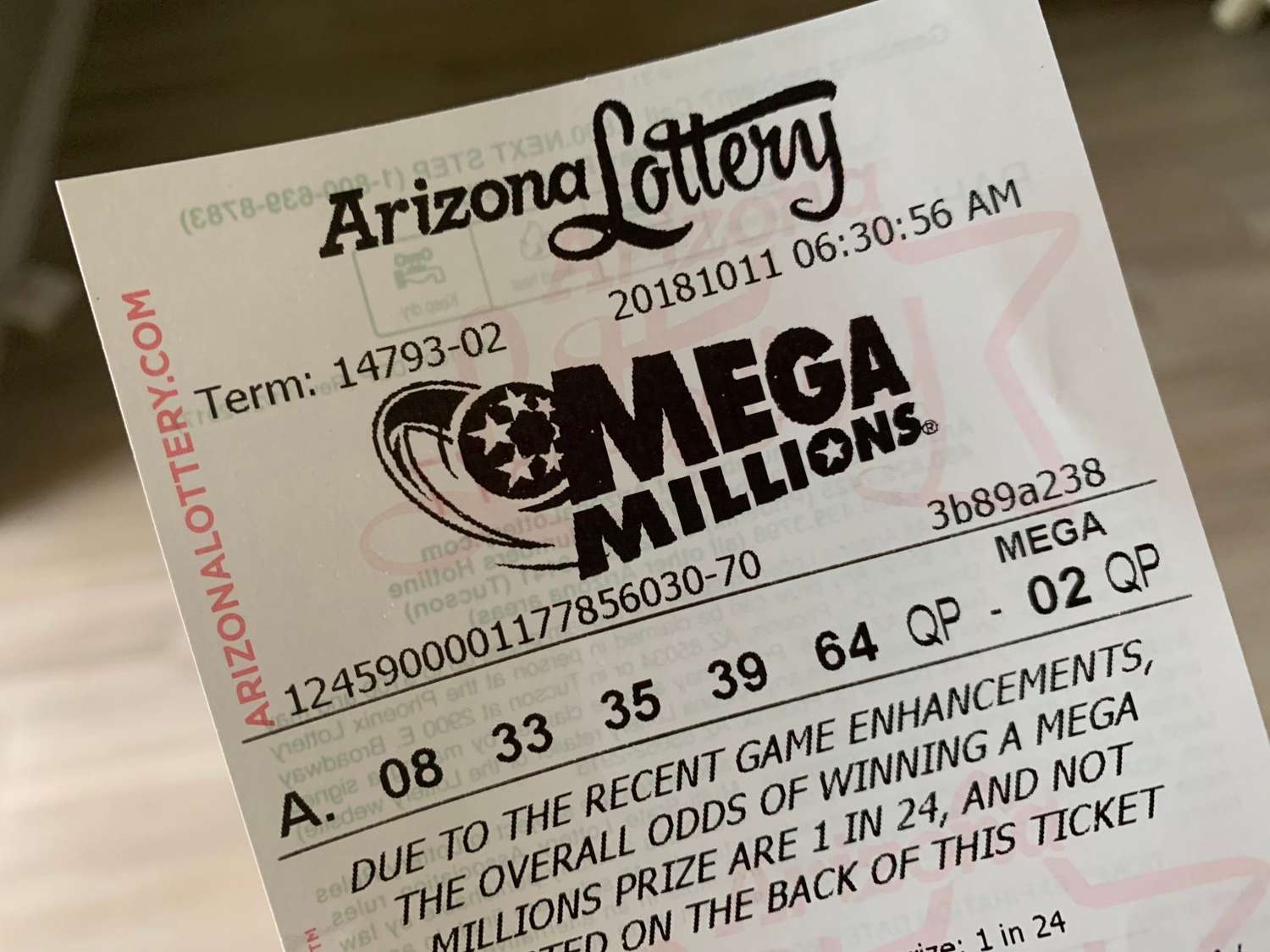
This is a guest post by Alice from Hot Take English on the topic of superstitions and bad luck. Students discuss common superstitions in English speaking cultures and their own, then read an article about some seriously bad luck. The main grammar focus of the lesson is the 3rd conditional to talk about hypothetical past events. Download the handout and teacher’s notes below:
Visit https://www.hottakeenglish.com/ to check out more of Alice’s work. She has some great, free materials on a range of engaging topics.
What Bad Luck – Student Worksheet
1) Warmer: superstitions
Below is a list of good and bad superstitions that are particularly popular in the UK and Ireland. Discuss them with a partner. From where do you think they originate? Do you believe they bring bad/good luck?
Things that bring bad luck:
Things that bring good luck:
What superstitions are there in your culture or country?
2) Vocabulary
Match the words on the left with their meanings on the right.
| 1. jackpot | a) extremely shocked |
| 2. invalidated | b) the sale was not successful/the money was not taken out of the person’s bank account |
| 3. stunned | c) not enough |
| 4. draw | d) the most valuable prize in a game or contest |
| 5. the payment didn’t go through | e) very very happy |
| 6. insufficient | f) stopped a ticket from being legally or officially acceptable |
| 7. on top of the world | g) the act of selecting numbers or names randomly to decide the winners of a competition |
3) Comprehension check
Read the article. Are these statements true or false?
4) Grammar practice
With a partner, write down as many third conditional sentences about the article as you can.
E.g. “If the payment had gone through, they would have won the lottery”.
Writing: My Biggest Regret
Write 100-500 words about your “biggest regret”. Include some third conditional sentences.
The 19-year-old was in shock when her numbers came up – until she noticed a critical problem
Originally published 2 March 2021
A 19-year-old student who thought she had won a £182m lottery jackpot has been left “absolutely heartbroken” after realising an error invalidated the ticket.
Rachel Kennedy, 19, and her boyfriend Liam McCrohan, 21, were stunned when their regular numbers of 6, 12, 22, 29, 33, 6 and 11 came up in the EuroMillions mega jackpot.
Kennedy had played the same numbers for five weeks in a row and had a direct debit set up to automatically play the numbers each week.
The teen was greeted with a message saying she had a ‘winning match’ after last Friday’s draw, according to The Sun.
However, the business student’s hopes of being one of the richest women in Britain were crushed when she found the ticket sale had not gone through due to insufficient funds in her account.
Rachel, of Brighton University, said: “I called my boyfriend Liam and my mum into the room and they couldn’t believe it either so I was like, ‘Oh! My God! I need to call them’.
“I called the number thinking that I had won £182m and they said ‘yeah you’ve got the right numbers but you didn’t have the funds in your account for the payment of the ticket so it didn’t actually go through’.
“I was on top of the world when I thought I had won, but when I found out I hadn’t, Liam was actually more upset than me.”
Rachel said they were “absolutely heartbroken” – and now thinks of her usual weekly numbers as “unlucky” and has decided to change them.
Source: iNews, https://inews.co.uk/news/euromillions-jackpot-player-heartbroken-finding-error-cost-182m-ticket-895016

This is a guest post by online language tutor and ELT writer Ned Widdows. Ideal for the first class back after Christmas, it is a B1-B2 lesson with reading, vocabulary and speaking, asking learners to reflect on their experiences of 2020 and to look forward to the year ahead.
Download the teacher’s notes and student handout below:
Warmer
Write New Year’s Eve on the board / in the chat and ask students to share:
Optional: share this image and ask students to describe what they see.
Briefly discuss how Christmas and New Year this year have been affected by the pandemic.
Procedure:
A – D on Student’s Handout is self-explanatory.
Optional ideas:

This is another guest post by Soleil García Brito. It is a reading, listening and speaking lesson plan for B2+ students based around the topic of compulsory vaccination. Download the materials below:
Teacher tip → Play twice if necessary.
Transcript
In the UK it’s up to parents whether their child gets vaccinated for measles. Last year 87% of children received their full dose of MMR; that stands for measles mumps and rubella. That number sounds pretty high, right? But if we want to ensure measles outbreaks don’t spread, we need ninety five percent of the public to be vaccinated. This is called herd immunity. But why are we so concerned about measles right now? Measles is one of the most contagious diseases; it can cause brain damage, blindness, and it can even be fatal. And now in England cases are rising. They’ve nearly quadrupled in the last year, going from 259 in 2017 to 966 in 2018. More than half a million children in the UK missed out on the MMR jab between 2010 and 2017, and each year the number of those being vaccinated is dropping. So why are vaccination rates falling? Well it’s not just the UK. In America 2.6 million children have gone unvaccinated. Some put this down to what’s known as the anti-vax movement. Anti-vaxxers believed that certain vaccines are not safe. Many worry that the MMR jab can cause autism, a theory stemmed from the British former doctor Andrew Wakefield. In 1998, he published a paper claiming there was a link, but his results were later completely debunked and he was struck off the doctors’ register. Since then the National Autistic Society has said there is no link between autism and the vaccine, but the scare story still continues to spread. Go online in search of information around vaccinations and you’ll find social media is awash with anti-vaccination propaganda. But is the anti-vax movement to blame? Actually, Public Health England believes social media isn’t a major factor. It’s surveyed parents and found that 93% viewed health care professionals as the most trusted source of information on immunization. In fact, public health England think the key to better vaccination rates is sending out reminders to parents and making GP appointments more convenient so that vaccinations can actually happen. So what can be done to increase vaccinations? Well, in France vaccinating children became a legal requirement last year. Could that be adopted here? Health Secretary Matt Hancock has refused to rule out children being kept out of schools if they haven’t been vaccinated against measles, but infection experts have said that this drastic solution could fuel a rise in the anti-vaxxer movement. For the moment the governor plans to stop the spread of fake news by introducing legislation that would force social media companies, like Facebook, to remove any post promoting false or misleading information about jabs, like MMR.
Teacher tip → there are 12 statements in total: 3 PRO, 3 AGAINST, and each of their counterpoints. This activity can be structured in many ways depending on class size, level and time constraints. Here is a suggested way of structuring the activity:
Have students look at the underlined words and phrases in the texts they’ve looked at; have them infer meaning from context and take note of collocations and useful expressions.
You can now conduct a class debate on the topic. Divide the class into two teams and decide which team will argue for and against compulsory vaccination. Encourage students to include their own ideas and opinions as well as the points and counterpoints previously studied. You can structure the debate in many ways. Follow the link below for language for debating and suggested debate structures: https://freeenglishlessonplans.com/2017/11/17/debating-at-higher-levels/
POINTS FOR COMPULSORY VACCINATION
POINT 1
It’s the state’s duty to protect its community
In an industrialized country such as the USA, unvaccinated people were 35-times more likely to contract measles than vaccinated ones; in developing countries where these viruses are still endemic, the risk would be considerably higher. After a scare about possible side effects of the MMR jab, in 2008 there was a drop in voluntary vaccinations in a part of London (Lewisham). In that part of London only 64.3 % of children were vaccinated and in that year the district accounted for one third of all South-East London measles cases. Unless there is a 95 % vaccination, there is a great threat to public health of infection outbreaks. It is therefore the role and duty of the state to understand these issues and possible threats and provide protection and care, in this case, in the form of immunization.
COUNTERPOINT 1
Voluntary immunization should be enough
Compulsory vaccination is an example of the tyranny of the majority even if it is coming from a democratic government. And in a community that praises itself as democratic and respectful to wishes of others it is in no way acceptable that the rights of some get abused by the wishes of others. Besides, The United Kingdom does not have a system of compulsory health care, but disease outbreaks are still prevented due to the voluntary immunizations. The pediatrician Miriam Fine-Goulden explains: “The risk of contracting these infections is only so low at present because the voluntary uptake of immunizations has been high enough (in most cases) to reduce the chance of contact with those organisms through the process of herd immunity.”
POINT 2
Duty to protect children
Each year millions of children worldwide die of preventable diseases before the age of five. The argument presented here is that the state needs to protect the child and immunize him or her from preventable diseases as obviously the child does not have the capabilities at this stage to make informed decisions of their own. The United Nations Right to Liberty and Security of the Person treaty, article 6.2 supports this view – State Parties shall ensure to the maximum extent possible the survival and development of the child.
COUNTERPOINT 2
Forcing parents to vaccinate could backfire
The key issue at stake here is who gets to decide about the healthcare needs of children – the authorities or parents? Critics of enforced vaccinations argue that it may have the opposite effect to that desired, and end up demonizing parental choice. Indeed, adopting compulsory vaccinations can be counter-productive, causing concerned parents to withdraw their kids from school and entrenching anti-vaccination sentiment.
POINT 3
Compulsory vaccines are a financial relief on health system
Commonly used vaccines are a cost-effective and preventive way of promoting health, compared to the treatment of acute or chronic disease. In the U.S. during the year 2001, routine childhood immunizations against seven diseases were estimated to save over $40 billion per birth-year cohort in overall social costs including $10 billion in direct health costs, and the societal benefit-cost ratio for these vaccinations was estimated to be $16.5 billion. Additionally, if less people get sick, productivity rates remain high and less money is destined to social and health programs.
COUNTERPOINT 3
The cost of vaccines is itself high
Vaccines themselves are expensive to develop in the lab and to mass-produce for widespread compulsory vaccination programs. The cost of developing a vaccine—from research and discovery to product registration—is estimated to be between $200 million and $500 million per vaccine. In addition to these upfront costs, organizing compulsory vaccination programs across an entire country can be very complicated and expensive. For instance, mechanisms must be set in place to ensure that the program is indeed compulsory, which means establishing a database of those that have and have not received the vaccine.
POINTS AGAINST COMPULSORY VACCINATION
POINT 1
Compulsory vaccination violates the individuals’ right to bodily integrity
In most countries and declarations, one of the most basic human rights is the one to bodily integrity. It sets down that you have a right not to have your body or person interfered with. This means that the State may not do anything to harm your body without consent. The NHS (National Health Service) explains: “You must give your consent (permission) before you receive any type of medical treatment, from a simple blood test to deciding to donate your organs after your death. If you refuse a treatment, your decision must be respected.” In the case of vaccination this principle should be also applied.
COUNTERPOINT 1
Social responsibility trumps individual rights
The problem with the idea of “individual rights” is that those refusing vaccines on account of this effectively violate the same right for other people if, and when, there is an outbreak of the disease against which the vaccine is protecting. Those who wish to opt-out of vaccination (often on behalf of their children, who have no say in the matter) are classic free riders, hoping to benefit from the more responsible behavior of the rest of society. As it is assumed that most of society see it as a responsibility and a duty to protect others.
POINT 2
It is a parental right to decide whether or not to vaccinate their child
Through birth, the child and the parent have a binding agreement that is supported within the society. This agreement involves a set of rights and duties aimed at, and justified by, the welfare of the child. As custodian, the parent is under the obligation to work and organize his or her life around the welfare and development of the child, for the child’s sake. Therefore, the parent is endowed with a special kind of authority over the child. If the parent believes the child will be safer and better off in society without being given vaccine it is the parent’s right to decide not to give vaccination to the child.
COUNTERPOINT 2
Parents do not have absolute rights to decide for their children
An adult vaccine refusal and a parental vaccine refusal are not the same. Parents do not have absolute right to put their child at a risk even if they themselves are willing to accept such a risk for him or herself. Minors have a right to be protected against infectious diseases and society has the responsibility to ensure welfare of children who may be harmed by their parents’ decisions. As seen not to vaccine children can represent a danger for their future, there should be no ultimate power of parents to prevent vaccine jabs.
POINT 3
Vaccines have severe side effects
Some of the used vaccines may have severe side effects, therefore we should let every individual assess the risk and make choices on their own. Besides introducing foreign proteins and even live viruses into the bloodstream, each vaccine has its own preservative, neutralizer and carrying agent. Evidence also suggests that immunizations damage the immune system itself, because vaccines trick the body so that it will no longer initiate a generalized response. In addition, the long-term persistence of viruses and other foreign proteins within the cells of the immune system has been implicated in a number of chronic diseases, such as allergies. Moreover, MMR vaccines may cause a child who is genetically predisposed to have autism, due to the Thimerosal, which is a compound that contains mercury.
COUNTERPOINT 3
Lack of evidence for prevalence of severe side effects
First of all, many of the arguments suggesting vaccination is dangerous refer to observations from the 60s or 70s. Since then, more recent studies have reported no link between MMR vaccines and autism. Similarly, a 2011 study from the German Health Institute comparing the prevalence of allergies and infections in vaccinated and unvaccinated children and teenagers, concluded that there was no difference between them, other than the frequency of vaccine-preventable diseases, such as mumps or measles.
The text was reproduced and adapted from http://www.idebate.org with the permission of the International Debate Education Association.
Copyright © 2005 International Debate Education Association. All Rights Reserved

This is a reading and listening lesson for B2+ students based around the topic of survival skills and myths created by Soleil García Brito. Download the student handout below:
Survival Skills – Student Handout – Word
Survival Skills – Student Handout – PDF
Look at these statements about survival. Are they factual or myths?
a) Anyone can start a fire with just two sticks
b) Boiled water is always 100% safe to drink
c) Reality shows about survival will help you prepare for a dire situation
d) You need to find food right away
e) You need to find water immediately to survive in desert heat
f) You can outrun a bear
g) The best way to stop a shark attack is by punching it in the nose
Read the texts and match the titles a-g
| “In reality, you can survive on just your body’s fat stores for weeks, as long as you have water. Conserving energy, avoiding injury, and sourcing a supply of water are key to surviving,” said Ras. “Hunting and trapping prey are hit and miss activities which often produce nothing and simply end up expending energy and risking injury or illness. It’s extremely rare for someone to die of starvation in a survival situation. Injury, illness, poisoning and exposure are much more likely to result in death. By definition, ‘surviving’ a situation is short-term, and in the short term a person can be fueled by their fat reserves.” | |
| “None of us would be here today if our ancestors hadn’t mastered the fine art of friction firemaking, but this is a skill to practice on camping trips and backyard outings,” said Tony Nester of Ancient Pathways Survival School. It’s a big mistake to rely solely on friction firemaking in a survival situation, especially when you could end up in a damp environment. Modern survival is about being prepared and carrying at least three firestarters (waterproof matches, spark-rod, lighter) with you at all times,” said Nester. “I teach primitive firemaking skills to show my students how to perform the method but find that, even under the best of conditions, it is a challenge and not reliable for most people.” | |
| “I’ve worked as a consultant on several reality shows and these shows are heavily-scripted,” said Nester. “On one program, there was a crew of 12 people accompanying us, including two staff whose sole job was to drag around coolers filled with double-shot espressos and sandwiches while filming scenes of the host living off the land. There’s nothing romantic or fun about real survival—it’s only adventure in retrospect.” | |
| Running away from a bear is a lost cause: Usain Bolt himself couldn’t beat one in a footrace, let alone on uneven terrain. The best thing to do depends on the species. If you encounter a black bear, said Nester, “Hold your ground and make yourself look big—open your coat up, throw your arms up above your head—and shout and scream and, a lot of times, they’re as spooked as you are, and will take off.” Take the opposite approach with a grizzly: “Avoid eye contact, which a bear will perceive to be a challenge. If the bear’s not approaching, back away slowly. If it charges, simply stand your ground. If you have pepper spray, be ready to use it… and pronto. If it makes physical contact with you, cover your vitals and play dead.” | |
| “Even though it’s true that sharks get stunned if they get punched in the nose, not many people the strength to do this, especially underwater,” said Manighetti. Even if you could manage the strength to hit the nose hard enough, there’s a chance your hand could end up getting injured by shark teeth. “The best way to scare a shark away is to scratch its eyes or gills, it’s impossible to overpower these fierce creatures in attack mode.” | |
| “While boiling water will kill off organisms and germs, it will not clean harmful particulates from the water. For instance, no matter how long you boil chemically contaminated water it won’t be safe to drink,” said Jack. “This same principle applies to stagnant dirty water. If the water you are attempting to purify is visibly dirty or murky, you should filter the water before attempting to boil it. If you don’t have a commercial water filter available, then you can either pour the dirty water through a clean fabric (towel or shirt) or leave the water to stand until the sediments sink to the bottom. Then just pour the clean water from the top…and then boil.” | |
| “You will last longer in the heat by holding up in the shade versus searching for water during the afternoon hours,” said Nester. “If you do run out of water, find a north-facing boulder and sit in the shade; keep covered to prevent evaporative sweat loss; stay off the hot ground by sitting on your pack or a pile of debris; and only move around during the cooler hours of the morning or evening.” If you didn’t tell anyone about your travel plans, though, rescue will likely take more than a few hours and you should search for water when the temperature drops. |
Text adapted from: https://www.theactivetimes.com/15-survival-myths-could-actually-kill-you-slideshow/
You are going to watch a video about surviving in extreme situations. These are the topics; are they good or bad ideas?
Questions:
Why are they bad ideas?

We’ve recently launched a Youtube channel for our podcast 2Ts in a Pod. There’s not much up there yet but more content is in the pipeline. Check out this video we’ve made looking at 5 expressions related to the topic of friendship. Why not show it to your students or set it as homework?
If you like the video, please consider subscribing to the channel, it’s a new project for us and we really want to get it off the ground so a like, a share and a subscription can go a long way!
You can also check out full episodes of our podcast on our Soundcloud page below. Any comments or feedback welcome.