
Saw this shared on Facebook, looks good.
Saw this shared on Facebook, looks good.
Image credit: www.english-heritage.org.uk
Follow me on twitter @RobbioDobbio
This is a grammar lesson on the theme of mysterious ancient monuments. I taught this class as my assessed lesson for the grammar assignment of my DELTA. Download the procedure, powerpoint and handouts below.
Let me know if the lesson procedure is clear enough as it’s written in Cambridge DELTA speak!
Lesson Procedure Past Speculation 3rd draft
The Mystery of Stonehenge 3rd draft – Students’ handout
The Mystery of Stonehenge Teacher’s copy with key – answers underlined
Mysteries of the ancient world 2nd draft – Powerpoint with pictures
The Mystery of Stonehenge – Students’ Handout
Thousands of years ago, an ancient civilization raised a circle of huge, roughly rectangular stones in a field in what is now Wiltshire, England. Stonehenge, as it would come to be called, has been a mystery ever since. Building began on the site around 3100 B.C. and continued in phases up until about 1600 B.C. No written records exist to explain how or why it was built.
How was Stonehenge built?
The biggest of Stonehenge’s stones, known as sarsens, are up to 30 feet (9 meters) tall and weigh 25 tons (22.6 metric tons) on average. Scientists believe that they must have been brought from Marlborough Downs, a distance of 20 miles (32 kilometers) to the north. Transporting the stones that distance can’t have been easy.
Smaller stones, referred to as “bluestones” (they have a bluish tinge when wet or freshly broken), weigh up to 4 tons and come from several different sites in western Wales, having been transported as far as 140 miles (225 km). It’s unknown how people in antiquity moved them that far. Scientists speculate that during the last ice age glaciers might have carried these bluestones closer to the Stonehenge area. An earlier theory was that the builders could have used rafts to transport the stones over the water. However, more recent research suggests that this method can’t have been used because of the weight of the stones.
What was Stonehenge?
There are a number of theories as to what the site was used for. Archaeologists agree that the site must have had a spiritual significance. It may have originally been a cemetery, according to a new study. After examining bones exhumed near the stones, scientists believe that the burials must have taken place at the same time as Stonehenge was built, suggesting that the stones could have been gravestones for religious or political elite.
Stonehenge may have been constructed with the sun in mind. One avenue connecting the monument with the nearby River Avon aligns with the sun on the winter solstice; archaeological evidence reveals that pigs were slaughtered at Stonehenge in December and January, suggesting that ancient pagan sun celebrations might have taken place there.
Steven Waller, a researcher in archaeoacoustics has revealed that before part of the ring collapsed it must have had excellent acoustics and speculates that it might have been an ancient concert hall or cathedral.
Wild theories about Stonehenge have persisted since the Middle Ages. Some say Merlin the wizard may have cast a spell to make the rocks as light as a feather to help with the construction. UFO enthusiasts believe that ancient aliens could have built Stonehenge as a spacecraft landing pad.
Look at the sentences on the board and complete the table
| Subject + | Modal + | _____________ + | _____________ |
| I
You He/she/it Etc. |
Could
Might May Must Can’t |
_______ |
…………………
………………… ………………… ………………… Etc. |
Answer the questions with your partner using past modals.
Scientists believe that the stones________________________________ a religious significance.
Scientists think that the stones _________________________________ from a different island.
The stones _____________________________________ to resemble a famous leader of the tribe.
Lesson Procedure
| Stage | Time | Focus | Procedure | Aim |
| Pre-reading | 5 mins | OC
In pairs |
Show picture of Stonehenge. Ask if anyone has been there. Share information with class.
Sts speculate. How old is it? How was it built? What was it? |
Introduce topic. To allow sts to apply top-down knowledge |
| Reading 1 | 2 mins | Pairs | Give out handout. Sts read intro. Report back to open class. How old is Stonehenge? | To confirm speculation and generate interest. |
| Reading 2 + language focus (meaning) | 20 mins | Pairs
OC |
Instruct sts to read next section quickly then read questions and answer in pairs.
Check answers – nominate – check across class.
Board first 5 sentences that answer questions with modal verbs. Ask questions: “How certain are the scientists?” to develop understanding of meaning. Board paraphrases: “could have” = “it’s possible” “must have” = “almost certain” etc. Repeat for sections 3,4,5. While sts read, board phonemics for sentences on board: /mʌstəv/ /ka:ntəv/ /meɪəv/ /kʊdəv/ /maɪtəv/ |
To confirm speculation. To test sts ability to understand past modals.
To develop understanding of meaning of target sentences. |
| Language focus | 5 mins | Pairs
|
Sts look at 5 boarded sentences, analyse structures and complete substitution table on handout:
Board formula: modal + perfect infinitive (have + past part.)
Focus on pronunciation, sts use phonemics on board to practice target sentences. |
To develop form of structures.
To develop pronunciation of past modals. |
| Speaking – controlled practice | 5 mins | pairs | Sts answer questions about text on handout in pairs, trying to use the target language. | To practice and become more familiar with the structures. |
| Writing – controlled practice | 5 mins | pairs | Show picture of Easter Island Heads with scientific theories. Sts complete sentence transformations on handout using past modals.
Check answers across class. |
To practice written form and meaning.
To check answers and practice pronunciation. |
| Speaking – controlled practice | 10-15 mins | Pairs
OC
Pairs/groups of 4. |
Sts speculate about the Easter Island heads in pairs. Monitor, board corrections.
Share ideas in open class.
Repeat with pictures of Magura Cave, Great Pyramids, Uffington White Horse.
Sts make speculations in pairs about new pictures then speak to pair next to them and share ideas. |
To practice and become more familiar with the structures.
To come to a consensus about speculations. |

Follow me on twitter @RobbioDobbio
My students are doing a mock CAE writing exam tomorrow so I’ve made them this worksheet to revise for it. I’ve also made a kahoot quiz to test them on some of the language.
On the first page there is a true/false quiz for students to complete in pairs, followed by two exercises on formal language and linkers.
Answer the questions with your partner:
Put the missing words back into the essay.
Hardly a week goes by without another report of the recent increase in online shopping appearing in the papers. The decline of the high street shop is undoubtedly a major issue in this day and _____. However, which aspect of shopping has the biggest influence ____ where people shop?
The first area to take into _______ is convenience. It is undoubtedly the ______ that shopping online is much more convenient than shopping on the high street. A clear example of this is that you can shop from the comfort of your armchair without lifting a finger. In _________, the goods are delivered directly to your door whereas when you shop in physical shops you have to carry it home yourself.
Another _______ to consider is cost. There are ______ who argue that cost has the biggest _______ on where people decide to shop. This is _________ by the fact that during the sales many people buy things in shops they would not normally enter. __________, for some people the cost is not an issue, they buy what they want to buy no matter the price.
In ______ of the above, it is probably _____ to say that cost has the biggest impact on where people decide to shop due to the fact that most of the time, if you cannot afford something then you will not be able to buy it.
| On case age nevertheless those aspect account addition impact illustrated light true |
Match the formal words or phrases (1-10) that can replace the words/phrases in bold (a-j) .
| 1. It goes without saying that
2. In light of the above, 3. It is widely believed that 4. Furthermore/Moreover 5. A great deal of + (uncountable noun) 6. Due to the fact that 7. A large number of + (countable noun) 8. There are those who believe that 9. In spite of the fact that 10. therefore |
a) Lots of people think that museums are out-dated.
b) Many museums do not cater for young children so they must be updated. c) The majority of public gardens are badly-maintained because local governments cannot afford to employ more gardeners. d) Although many youngsters still play sports, participation id decreasing due to the influence of video games. e) To sum up, it is vitally important that local governments invest more in museums. f) Obviously having access to good sports facilities makes it easier to participate in both individual and team sports. g) Some people think that investing in public gardens is a waste of money. h) Also, many sports facilities are overcrowded due to a rise in demand. i) Local governments have already spent a lot of money on upgrading the city’s parks and gardens. j) A lot of local people have expressed their disappointment with the cuts in public spending for museums. |
Just stumbled upon the TEFLtastic blog and it’s full of amazing materials. I’ve added it to my blogroll and I’m going to be using a lot of their great FCE speaking materials this year. Check it out.

Image credit: maybusch.com
Follow me on twitter @RobbioDobbio
This is a speaking activity for intermediate and upwards on the subject of persuading and convincing. It can be used as preparation for FCE and CAE due to its similarity to part 3 of the speaking test.
You will need this powerpoint:
Split the class into groups of 4 or 5. Use this quizlet set to practice language for convincing and persuading. For higher levels get them to brainstorm the language in pairs first and then board it.
Language from the quizlet set:
Key:
think
Wouldn’t
should
going
ought
insist
far
about
Students discuss the different situations in the powerpoint in their groups of 4-5. Nominate one person from the group to be the person who the others must persuade (parent, headmaster, boss, editor, friend)
Report back at the end. Who was the most persuasive?

Image credit: theguardian.com
Follow me on twitter @RobbioDobbio
Download the worksheet here:
And the picture reveal powerpoint here:
Yet another lesson plan on picture descriptions, deduction and speculation. What can I say? I’ve got to prep a lot of students for FCE speaking!
Warmer – Who’s this?
Show students the picture of BBC radio 2 DJ Steve Wright but don’t tell them who it is. Put them in groups and tell them to come up with an idea of who he is. Monitor and check what language they’re using, board any nice examples of speculative language.
Students present their ideas of who he is. After reveal that he is a famous radio DJ in the UK.
Speculative Language
Handout the exercise on the worksheet. Have students complete the gap-fill in pairs; encourage them to discuss it in English: “Number 1 could be …, don’t you think?” etc.
Complete the sentences with a word from the box
| guess can’t as could/might/may perhaps pretty must |
Review as a class:
Choral drill sentences for intonation and sentence stress.
Practice
Show students the pictures of more English celebrities. Elicit the instructions to the next activity, (use the new language to speculate about the people in the photographs)
Students share ideas as a class, award points to groups that guess correctly.


Answers:
Picture Reveal Game
Massive thanks to https://tekhnologic.wordpress.com/ for the amazing picture reveal powerpoint template I’ve used for this next activity.
Project the first slide of the picture reveal powerpoint. Students take it in turns to choose a number, click on the number and it will disappear, revealing part of the picture underneath. Students must then speculate as to what the picture is. Award points for correct use of the phrases and teams that correctly guess the contents of the photo.
Slide 4 is an actual FCE part 2 task with 2 pictures to compare and contrast, while slide 5 is a part 3 collaborative task that students can complete in pairs or threes at the end of the game.
Follow-up
Nominate a few students to bring a photo to the next class to repeat the activity as a warmer.
Follow me on twitter @RobbioDobbio
This is a worksheet to practice different collocations putting similar words into context. It will be useful for teachers teaching CAE preparation classes as it will help students develop the skills needed for part 1 of the use of English paper. Download the worksheet below:
Use of English – Collocations
Border verge line edge
Intensely utterly highly exceptionally
Turned out came out carried out gave out
Distinct contrary unlike opposite
Put through set out fixed up laid on
Section version department categories
Composed compiled joined unaccounted
Remain endure persisted stay
Key:
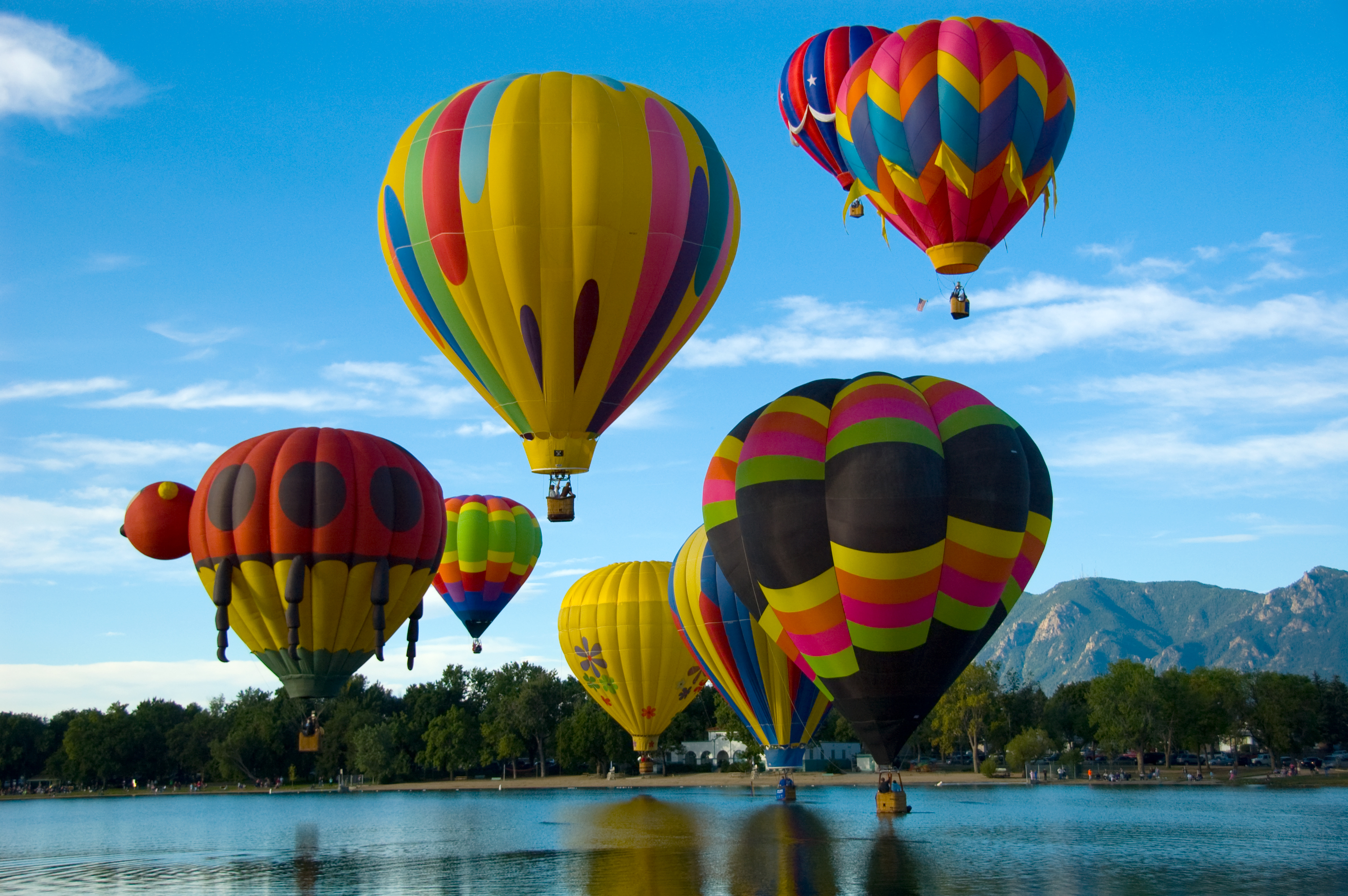
Photo credit:en.wikipedia.org
Follow me on twitter @RobbioDobbio
Before you use these materials, why not check out our new podcast for learners and teachers alike? It’s called 2Ts in a Pod, have a listen here:
This is a conversation lesson plan to practise past (3rd) conditional structures whilst debating the value of specific professions to society. Credit to the university of Kent for the inspiration for the activity. I have changed the wording of the task slightly so that students must imagine a world without the achievements and inventions of some famous names from history.
You will need the handout, I have made 4 versions:
Intermediate teens:
Balloon Debate intermediate teenagers
Intermediate adults:
Balloon Debate Intermediate adults
Advanced teens:
Advanced adults:
I planned this as an activity to practise uses of advanced 3rd conditional structures such as:
But for + noun phrase, would/could/might have….
But for Thomas Edison, the lightbulb would have been invented much later.
Or inverted past conditionals:
Had it not been for Shakespeare, we wouldn’t have such a rich vocabulary.
You may want to preteach these structures using my other materials which you can find here and here.
Below you will find they advanced adults version of the activity.
Balloon Debate
You are in a hot air balloon which is losing height rapidly and will soon crash because it is overweight. You are travelling with a group of school children who will grow up to be very famous. You have to decide which 7 to throw over the side; if the balloon crashes you will all die. The passengers are:
|
|
Language
| Conditionals | Making Decisions |
| If_____ hadn’t invented_____, _____ wouldn’t have happened. | There’s no way we’re throwing ______ overboard because______ |
| But for ________ we wouldn’t have________. | Throwing _______ is out of the question because________ |
| If it hadn’t been for ______, we wouldn’t have _______ now | I think ________ is expendable. |
| Had it not been for _______, we wouldn’t have________. | What did _______ really do for us? |
Examples:
If Charles Darwin hadn’t discovered evolution, society wouldn’t have developed like it has.
If it hadn’t been for Gandhi, India would still be a British colony.
But for Shakespeare, we wouldn’t have such a rich language.
Had it not been for Abraham Lincoln, the slaves wouldn’t have been freed.
Homework Activity:
Students write an essay examining two of the people from the balloon and deciding which one has contributed most to society. They must compare and contrast the achievements of the two and reach a conclusion as to which should be crowned as the most inspiring person in history.
Follow me on twitter @RobbioDobbio
This is essentially the same as my CPE sheet but with the title and word limit changed. Download it here:
| Register: Informal/neutralUse: all your colourful vocabulary:
Phrasal verbs/idioms/impressive collocations. |
Forms and conventions:Title: for films/books/restaurants use the name/title or if think up an imaginative title using an idiom/expression. | ||
| Planning, 6 step system:1. Read task, underline content points.
2. Divide content points into paragraphs: Intro, décor, ambiance, service, food, recommendation. 3. WHAT do you want to say? Add your notes to each paragraph in simple form. 4. HOW are you going to say that? Brainstorm advanced grammar and vocabulary for each note. 5. Forms and conventions: Title paragraph titles, fixed introduction. 6. Write! Remember word limit is: 220-260 |
Introduction:Personal anecdote to grab attention. Introduce name of book/film, restaurant + location, course, TV show etc.
Seldom do I find the time to…, however when I do take time out of my hectic schedule, I like nothing more than… Being a bit of a film buff/book worm/foody, the news that … had opened a new restaurant/released a new film/book had me itching to try/see/read it. So last week I popped down with a friend to check it out. Having never seen/read/tried… before I approached … with a sense of trepidation, not knowing what to expect. Soon however, all my fears were allayed. |
||
| Book reviews:Vocab to describe the book in general:
a page-turner / a white-knuckle ride / a tearjerker / a laugh a minute / I couldn’t put it down. Vocab to describe specific parts: a slow start / a gentle introduction /gripping climax / nail-biting conclusion / cliff-hanger ending/ a shocking twist in the tail Setting: The book is set in _______(place/time) The action takes place in ______ (place/time) the present day (now) an alternate reality where vampires / wizards walk the earth a sleepy village in the USA the bustling city of New York Plot: The plot centres around / focuses on (the adventures / lives of _________) The plot follows the adventures of _________(character name) Characters: Villain / hero / heroine / anti-hero / main character / protagonist The characters are believable / well-crafted / a bit 2 dimensional. |
Film/TV reviews:General:
An all-star cast heavily influenced by the films of.. glowing reviews startling originality suspense builds up a polished performance a bold experiment an accomplished actor an unmitigated disaster (bad film) a dazzling display of his/her talents made a lasting impression on me. Brought a tear to my eye Like watching paint dry (boring) I was on the edge of my seat (exciting) A blockbuster (big commercial film eg Superman) … sets off an amazing chain of events Gripping film (exciting) The director/author evoked a magical atmosphere … awakened my interest in… Hold my attention Capture the audience’s imagination. Spectacular set-pieces (main action scenes) … is cast in the role of… … is miscast in the role of… …gives a(n) (un)convincing performance as… The film is let down by a clichéd script. |
||
Restaurant review:
|
Restaurants cont.Make a pig of one’s self
To feast/gorge on (eat a lot of) To eat/drink to your heart’s content Devour/gobble up Savour Nibble Bite Lick Aromas wafting from the kitchen Cheap – economical/reasonably-priced Expensive – pricey/costs an arm and a leg €20 a head (per person) |
||
| Killer Lines:Were I to sum up … in one word, it would be…
… left a lot to be desired (wasn’t good enough) …more than lives up to the hype (is as good as everyone says it is) … is by far and away the best … you’re likely to … this year … really raises the bar (sets a higher standard) … sets the benchmark for other (others will be judges against how good it is) … ticks all the right boxes … holds up well in comparison with … …comes off badly in comparison with … |
Grammar check listHave you included?
· An inversion (not only/no sooner/seldom) · An inverted conditional (Were we to…) · A participle clause (Being…/Having gone…) · A double comparative (The more we… the more) · A cleft sentence (What is most crucial is…) · Idioms · Phrasal verbs |

Follow me on twitter @RobbioDobbio
I’ve made this set of phrasal verb questions for CAE (C1) students using Adam Simpson’s amazing Who wants to be a millionaire template.
Download the template here to make your own.
Or download my phrasal verb version here:
who-wants-to-be-a-millionaire-phrasal-verbs
Or my B1/B2 version that covers verb/noun collocations, prepositions and phrasal verbs: