Posted in 2Ts in a Pod: Podcast, Advanced C1, B2 First, Listening Classes

Halloween: Spooky Story – Bruiser the Dog B2+

This is a listening and conversation lesson plan for B2+ learners. Use it to scare your students this Halloween!

The lesson is based around a spooky story called Bruiser the Dog told by professional story-teller Wilf Merttens on the Halloween episode of our podcast 2Ts in a pod. You can listen to the whole episode below, but the section you’ll need for the lesson plan is from 40:08-43:10. Students will predict what will happen in the story, do some detailed listening and then discuss their deepest, darkest fears! You’ll find all the lesson materials below. Happy Halloween!

Lesson materials:

To use the audio offline, you can download the whole episode from SoundCloud like this:

Audio Link

2Ts in a Pod Episode 40: Halloween

The story is towards the end of the episode from 40:08-43:10

Predictions

You’re going to listen to a spooky story that involves a young girl, an old house and a big dog called Bruiser. Make some predictions about what’s going to happen.

  1. Put students in pairs and have them make predictions.
  2. Make sure students cover the transcript until later in the lesson.

Comprehension Questions

Instructions:

  • Students read the comprehension questions then listen to the audio twice.
  • Put them in pairs to compare their answers.
  • Students listen again with the transcript to clear up doubts.
  • Clear up doubts about the highlighted vocabulary.
  1. Why did the girl often stay alone in the house with only her dog?
    Her mother worked away from home often, leaving the girl alone in their large, old house with her dog, Bruiser.
  2. What did the girl do when she felt scared at night, and how did Bruiser comfort her?
    When she felt scared, the girl would dangle her hand over the side of the bed, and Bruiser would lick her fingers to comfort her.
  3. What bad news did the girl hear one night that disturbed her sleep?
    She heard that a notorious serial killer had escaped from a nearby prison and was on the loose in the area.
  4. What unusual sounds did the girl hear while trying to sleep?
    She heard noises on the stairs and a creak in the hallway, as well as her bedroom door creaking open.
  5. What did the girl discover at the end of the story that shocked her?
    She found Bruiser’s dead body lying in the hallway, revealing that it wasn’t Bruiser who had been licking her fingers during the night.

Conversation

  1. What did you think about the story? Did it scare you? Why or why not?
  2. Why do you think the story is effective as a scary story? What elements make it frightening?
  3. Have you ever experienced something spooky or heard a similar story? How did it make you feel?
  4. Why do you think people enjoy listening to scary stories like this one?
  5. What kinds of stories or situations scare you the most? Why do you think they have that effect on you?
  6. How do you usually react when you feel scared or nervous? Do you try to stay calm like the girl in the story?
  7. What would make the story even scarier in your opinion? Would you change anything to make it more intense?
  8. Do you think scary stories are more effective when they involve realistic situations, like being alone in a house? Why or why not?

Transcript

(0:00) There was this thing that happened near where I live that’s always stayed with me. (0:06) There was a girl about 14 or 15 years old and (0:11) she lived alone with her mother because her father had died some years before and (0:16) her mum had to work away a lot and she would leave her daughter alone in this big old house. (0:24) Now, (0:26) the daughter was very brave and didn’t mind being left.

Plus, she had a big dog. (0:32) He was a fearsome, fearsome dog. Yeah, I think he was an Alsatian and he was called Bruiser and (0:41) well, she had a kind of nighttime ritual with Bruiser and that was that he would sleep under her bed and (0:48) if she was ever scared in the night, she would dangle her hand over the bed and (0:54) he would lick her fingers in that way that that dogs have of doing.

(1:00) Now, there was very scary news one night. I remember it myself and that was that there’s a jail, (1:07) a prison quite local to us, (1:11) and there was news that a (1:13) notorious serial killer (1:15) had escaped from the jail and was on the loose in the area. Now, I told you this girl was very rational.

(1:24) She told herself there is (1:27) only the tiniest chance that he’s going to come knocking at my house of all the houses and so she took herself to bed and (1:34) she took Bruiser with her and she lay down and she went to sleep. (1:39) She didn’t sleep very well. She only slept fitfully.

(1:44) She kept waking up, tossing and turning. Probably the bad news had disturbed her and she was having bad dreams, but (1:51) every time she woke up, she would just dangle her hand over the edge of the bed and (1:59) there’d be (2:01) Bruiser licking her fingers and she would feel comforted and she would go back to sleep. (2:09) Now, a few times she felt like she heard a noise on the stairs or a creak in the hallway, (2:14) but those are just the noises that old houses make.

(2:19) But then the door (2:29) creaked open on its own, but (2:32) she wasn’t scared because that was something the door sometimes did, another quirk of an old house. (2:39) She wasn’t scared, at least, (2:43) until she saw (2:45) lying in the hallway (2:48) the dead body of Bruiser the dog.

Conversation

  1. What’s your biggest fear? Where does it come from?
  2. Do you believe in ghosts? Have you or someone you know ever seen one?
  3. Would you visit a haunted house?
  4. Do you have any phobias like fear of heights, spiders, or flying? How do they affect you?
  5. Do you know anyone with a serious phobia? How does it impact their life?
  6. Are phobias irrational, or do they have roots in real experiences?
  7. What treatments do you think help with phobias? How do you feel about hypnosis or exposure therapy?
  8. What scared you most as a child? Did any characters or stories give you nightmares?
  9. Do you like horror films? Which type scares you most: gory, psychological, or supernatural?
  10. Were you ever scared of a teacher or another adult as a kid? Why?
  11. What social situations make you anxious? Public speaking? Parties with strangers?
  12. Can social anxiety be managed? How?
  13. Do you feel safe in your town? What do you find most unsettling about it?
  14. Are there current news stories that worry you about the future?
  15. Are you easily startled? Has anyone ever tried to scare you with a practical joke?
  16. Have you ever dressed up for Halloween? What costumes have you tried?

Homework – Research a Spooky Story

  1. Look for a spooky story or an urban legend on the internet. It can be in any language.
  2. Don’t copy or print the story, make notes about it, for example:

Bruiser the dog:

  • Girl, dad had died.
  • Mum works a lot.
  • Girl is alone at home.
  • Has a dog called Bruiser.
  • Serial killer escaped from prison.
  • Girl goes to bed.
  • Bruiser licks fingers under the bed to comfort her.
  • Wakes up in the night, Bruiser licks her fingers.
  • Bedroom door opens, she sees Bruiser’s body…
  • Who is licking her fingers???

As a follow-up class, put students in small groups, have them choose one of the urban legends they bring in. They must then make it as spooky and suspenseful as possible before telling it to the rest of the class.
Posted in Advanced C1, Exam Preparation Class, Proficiency

C1/C2 Halloween Spooky Word Formation: The Family Legacy

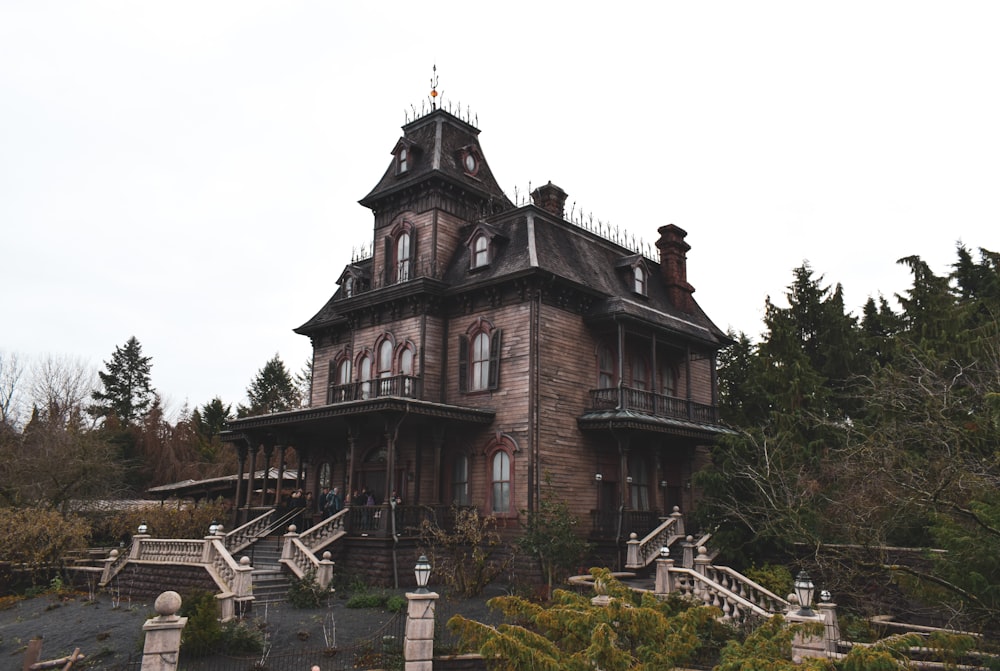
Haunted Mansion Pictures | Download Free Images on Unsplash

This is a lesson plan for C1/C2 students who are preparing for an upcoming exam but still want to celebrate Halloween in some way. Students read a creepy story about an old family home, practice some word formation and then write their own continuation of the story. I wrote the story myself, let me know what you think! Download the handout and teacher’s notes below:

Pre-Reading

You’re going to read the first part of a horror story called “The Family Legacy”, it involves:

  • A father
  • A son
  • An old house

With your partner, make some predictions about what will happen in the story.

Reading

Read the story, ignore the gaps, see if your predictions were correct.

Roger trudged up the drive of the ancient hall, the seat of his family’s power for over two centuries. It stood on the top of the hill looking down over the land around, a 1. ………………(SYMBOL) effigy of the family’s grasp over the local 2. ……………. (POPULATE). Finally it was his, the jewel in the crown of his 3. ……………… (INHERIT) after his father’s passing the previous week. In the end, the death of the formidable patriarch of the family had been far from the 4. ……………… (PAIN) transition we all hope for, screaming night terrors, lashing out 5. ……………… (VIOLENT), catching his 6. ………………(SUSPECT) carers off-guard, until the final descent into silent 7. …………… (MAD) It was something that had befallen the last three generations of men in his family, a thought that he pushed to the back of his mind as a/an 8. ………………. (VOLUNTEER) shudder ran down his spine.

But it was over, and he could now envisage the 9. …………….. (REALISE) of all the 10. ……………… (BOY) hopes and dreams he had had for this 11. ……………….. (CRUMBLE) pile of stone and wood. As he approached the ancient 12. ………………..(WOOD) door, he took the old iron key from his pocket and unlocked it with a 13. ……………….. (SATISFY) thunk. As he stepped across the threshold his 14. ……………….. (FOOT) echoed throughout the house in a/an 15. ……………….. (SETTLE) way. What struck Roger immediately were the reminders of his father’s 16. ……………….. (QUESTION) taste in decorations; floor to ceiling oil paintings of 17. ……………….. (NOTE) ancestors and the heads of various animals mounted on the walls. He relished the thought of finally 18. ……………….. (CLUTTER) the whole place. No sooner had this thought crossed his mind than around the corner came an almost 19. ……………….. (PERCEIVE) breath of air, which flowed through the ground floor, as if the house itself was reacting to a/an 20. ……………….. (INVITATION) guest. The door slammed shut behind Roger, he heard a loud “clang” as the heavy old key hit the stone of the porch outside. Suddenly gripped by panic he grabbed the door handle and pulled with all his 21. ……………….. (STRONG) but to no avail. A sudden sense of 22. ……………….. (CONFINE) enveloped him, but what really set his nerves jangling and a creeping sense of 23. ……………….. (EXIST) dread curling up his back was the voice calling down the stairs from his father’s study….

Word Formation

Now look at the gaps, try to predict what type of word is needed, then attempt to transform the root words to fit the context.

Language Analysis

  1. How does the writer make the story creepy?
  2. Find two examples of onomatopoeia in the text. 
  3. Find and underline the sentence with “around the corner”
    1. What do you notice about the syntax?
  4. Look for impressive collocations with the following words:
Power…………………………………………Grasp…………………………………………Jewel…………………………………………Patriarch…………………………………………Catching…………………………………………Madness…………………………………………Mind…………………………………………Spine…………………………………………Hopes and dreams……………………………Footsteps…………………………………………Taste…………………………………………Relish…………………………………………Guest…………………………………………Door…………………………………………Panic…………………………………………Strength…………………………………………Sense…………………………………………Nerves …………………………………………

Production

Write the next paragraph of the story. Try to use:

  • Inversions: 
    • No sooner…. than….
    • Hardly/Barely/Scarcely….. when
  • An inversion of place:
    • Into the river jumped the boys.
    • At the top of the stairs sat a black cat.
  • Spooky language:
    • A shiver down the spine
    • unsettling/creepy/etc.
Posted in 2Ts in a Pod: Podcast, Listening Classes

2Ts in a Pod: Halloween Special 2020

Image credit: Mark Wilding

2Ts in a Pod is back with our first episode of season 4! It’s the 2020 Halloween special!

Some great creepy stories to use as listening activities in your classes this week! Try the spine-tingling one from 40:09-43:05 by friend of the pod Wilf Merttens.

If you like what you hear, check out Wilf’s podcast The Wilfiad: https://podcasts.apple.com/gb/podcast/the-wilfiad/id1198607038

Posted in Advanced C1, Grammar Classes, Proficiency

Halloween Horror Story: C1/C2 Inversions

This is a spooky grammar lesson for Halloween. Students listen to the first part of a horror story in the form of a dictogloss, then continue the story using inversions. Download the handout and teacher’s notes below:

Horror Story Dictogloss – Teacher’s Notes

Pre-Listening

Tell students you’re going to read them the introduction to a horror story. It features a haunted mansion and the first line is “It was a dark and stormy night…” Tell them to make predictions about what will happen.

Dictogloss

Explain the dictogloss to your students:

You will read the story to them several times. A note on delivery, read the text in a natural way, don’t pause mid-sentence, follow the punctuation. You may want to exaggerate the pauses after full stops and commas to give students a bit of extra processing time.

  1. The first time all they have to do is listen.
  2. Second time they can take notes of words and phrases, stress that it’s not a dictation and that they shouldn’t worry if their version is different.
  3. Students compare notes with a partner or in a three.
  4. Students listen for a third time, taking notes and then compare with their group again. You may want to read the text for a fourth time, gauge it with your own group.
  5. Students work to recreate the text. You could do this on a Google doc so you can see the versions taking shape. Assign each group a page of the doc so that they’re not tempted to copy each other.
  6. Show them the original text and copy/paste all their versions below. Have them compare their versions and looks for differences.

It was a dark and stormy night, the wind was whistling through the trees and the rain was pouring down. Not only was I completely soaking wet, but also my teeth were chattering because of the icy wind. I knocked on the door of the ancient run-down mansion as hard as I could; little did I know the horror that awaited me on the other side of the door. No sooner had I ceased my knocking than the door swung slowly open. The darkness on the other side was pitch-black but so desperate was I to get out of the storm that I jumped inside without a second thought. Hardly had I set foot inside the house when the door slammed shut behind me…

Language Focus

Ask students to complete the following language analysis task in pairs:

  • Meaning – substitute the phrases in bold for other, simpler words so that the meaning is the same.
  • Usage – why do you think the writer decided to use the phrases in bold instead of simpler language? What effect do these expressions have on the reader? More emphatic, more exciting, draws the reader in.
  • Form – Look at the word order after the inversion phrases:
    • Not only…
    • Little…
    • No sooner
    • So desperate…
    • Hardly…
  • Complete the formula: Inversion phrase + _______ + _______ + _______

(Inversion phrase + auxiliary verb + subject + verb)

Show students further examples of each inversion:

Not only: used with a wide range of tenses and auxiliary verbs:

  • Not only are vampires afraid of crosses, but also garlic.
  • Not only did the werewolf have sharp teeth, but also long claws.
  • Not only would I recommend calling the police, but also I would run away as fast as I could.

Little: most commonly used with “know” and “realise”:

  • Little did I realise how much danger I was in.
  • Little did she know what had just happened in the other room.

No sooner…. than: Or Hardly…. when Most commonly used with past perfect to express that one action happened immediately after another:

  • No sooner had I closed the door than I heard a strange scratching sound.
  • No sooner had I fallen asleep than a strange light came in through the window.
  • Hardly had the sound stopped when the door burst open.
  • Hardly had I turned around when the beast appeared at the end of the corridor.

So + adjective + that…: Used with a range of adjectives to add emphasis and express consequences:

  • So cold was it that my hands were shaking.
  • So frightening was the beast that even the brave soldier screamed in fear.

Practice – Key

  1. I had just opened the door when the monster appeared.

HAD

Hardly had I opened the door when the monster appeared.

  • They had no idea that the beast was watching their every move.

REALISE

Little did they realise (that) the beast was watching their every move.

  • The enormous size of the beast’s tentacles stopped them from reaching the exit.

WERE

So enormous were the beast’s tentacles that they couldn’t reach the exit.

  • As soon as they were outside the house, she called the police.

HAD

No sooner had they got out of the house than she called the police.

  • The car wouldn’t start and the gun was jammed.

WOULD

Not only would the car not start but also the gun was jammed.

  • They didn’t know that the call was coming from inside the house until it was too late.

THAT

Little did they know/realise that the call was coming from inside the house until it was too late.

Production

Have students write another paragraph of the story either in class or for homework. Encourage them to use as many inversions as possible and other descriptive language.